The Digital Tightrope: Why Young Voters Face the Toughest Test in a Misinformation Age
Every election cycle, commentators talk about the youth vote as a powerful, untapped force. Today’s young voters are the first generation of digital natives to come of age with smartphones in hand, their political consciousness shaped by algorithms and endless feeds. This unprecedented access to information is a double-edged sword. While it offers endless opportunities for engagement, it also creates a treacherous landscape of misinformation, emotional manipulation, and partisan outrage.
For young people building their political identities, learning to navigate this environment is not just a civic duty—it is a fundamental challenge of modern citizenship. Their relationship with digital media will define the future of political discourse.
A Feed Full of Feelings
The political arena for previous generations was dominated by televised debates, newspapers, and campaign rallies. For voters under 30, it is a space of infinite scrolling, algorithmically curated content, and platforms that prioritize engagement above all else. Social media feeds are not designed to inform; they are designed to hold your attention. And nothing holds attention quite like a strong emotional reaction.
Content that sparks anger, fear, or outrage is consistently rewarded with more visibility. Nuanced policy discussions and fact-based reporting often get drowned out by inflammatory memes, edited video clips, and emotionally charged commentary. This creates a political diet high in emotional calories but low in nutritional substance, making it difficult to form a balanced view.
This environment is particularly potent for younger audiences. Researchers at major universities have noted that emotionally-driven content can bypass critical thinking, making users more likely to accept information that confirms their existing biases without scrutinizing its source or accuracy.
Misinformation Gets a Makeover
The term “fake news” often brings to mind poorly designed websites mimicking legitimate news outlets. But modern misinformation is far more sophisticated and tailored for the social media age. It has blended seamlessly into the digital formats that young people trust and share every day.
These new forms of misinformation are harder to spot and easier to spread:
• Weaponized Memes: Simple, shareable images with text that can distill a complex issue into a misleading or outright false claim. They spread rapidly because they are entertaining and easily digestible. • Deceptive Video: This ranges from videos edited to remove crucial context to sophisticated AI-generated “deepfakes.” Short-form video platforms are a fertile ground for this content, as viewers often watch dozens of videos in a single session with little time for reflection. • Influencer Propaganda: Political actors can pay or persuade social media influencers to spread specific narratives. These messages feel authentic and personal, coming from a trusted figure rather than a traditional political source.
How to Build Digital Resilience
The challenge may seem overwhelming, but it is not insurmountable. Cultivating healthy, critical habits for consuming information is the key to navigating the digital world. The goal is not to disengage, but to engage smarter. Building this resilience requires a conscious effort to question what you see.
Here are a few strategies to develop a more balanced information diet:
• Pause Before You Share: Emotion is a tool used to make content go viral. If a post makes you feel a strong surge of anger or validation, take a moment. That emotional intensity is a red flag that you should investigate further before accepting it as fact. • Check the Source (and Theirs): Don't just trust the account that posted the content. Look into the original source of the information. Is it a reputable news organization, a known partisan blog, or an anonymous account? Good reporting cites its own sources, so see where they got their information. • Read Laterally: When you encounter a new claim or a new source, open new tabs. What are other, diverse sources saying about the same topic or organization? This habit of cross-referencing is one of the most effective ways to quickly spot biases and falsehoods.
A Shared Responsibility
Individual media literacy is crucial, but it is only part of the solution. The tech platforms that design these addictive, emotion-driven systems have a responsibility to foster a healthier information ecosystem. Promoting authoritative sources, increasing transparency in their algorithms, and penalizing bad actors more effectively are essential steps.
Educational institutions also have a vital role to play. Digital literacy should be a core component of modern education, equipping students with the critical thinking skills to analyze, evaluate, and create media. It is a lifelong skill as essential as reading or writing.
The Future of Informed Democracy
Young voters today are not more gullible than previous generations. They are simply contending with a media environment that is fundamentally different—one that is faster, more personalized, and more emotionally manipulative than ever before.
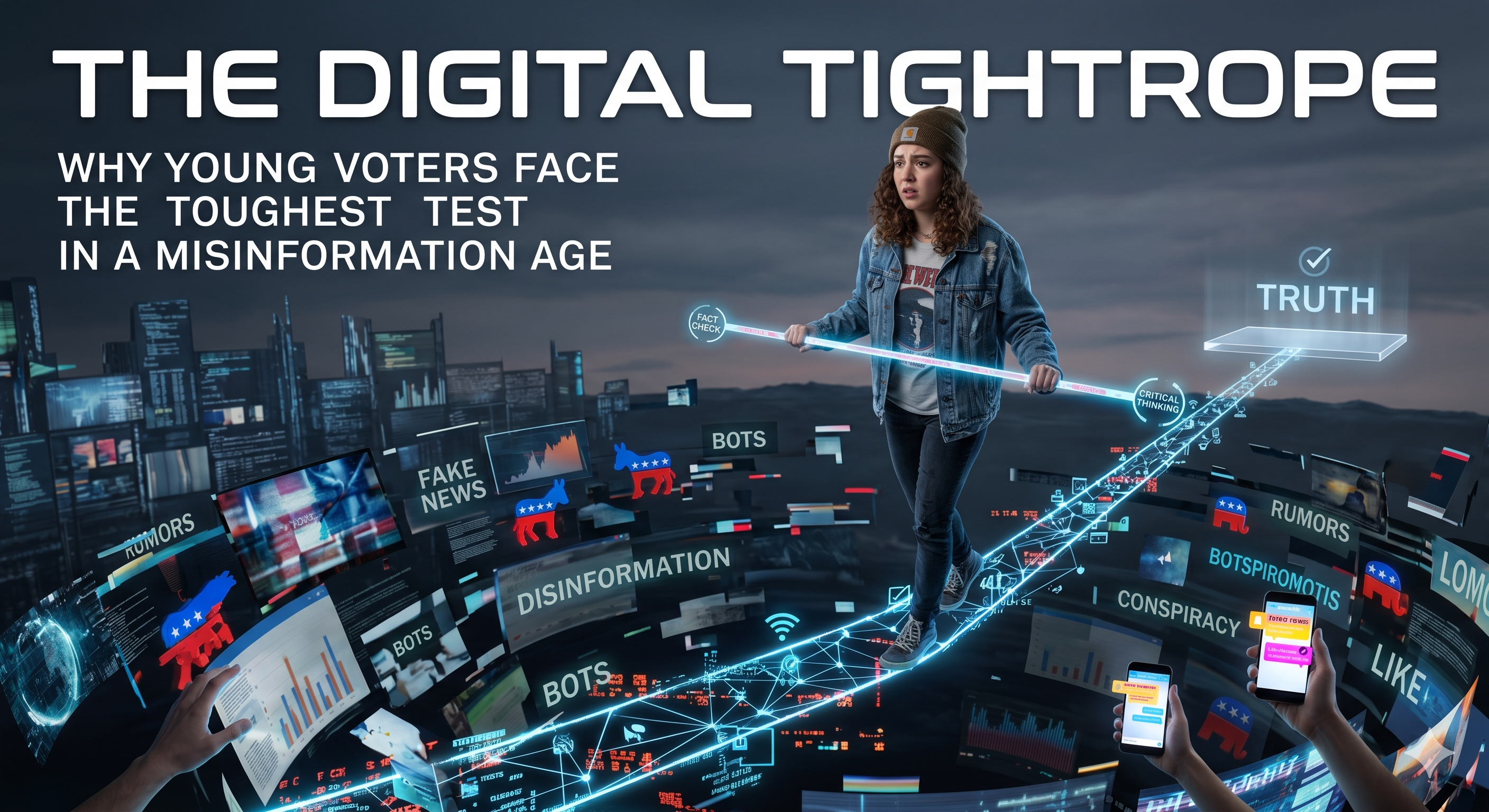
The strength of our democracy depends on an informed electorate. For the digital generation, this means learning to walk a difficult tightrope. By fostering critical thinking skills and demanding more accountability from tech platforms, we can help them navigate the noise and find the truth.